
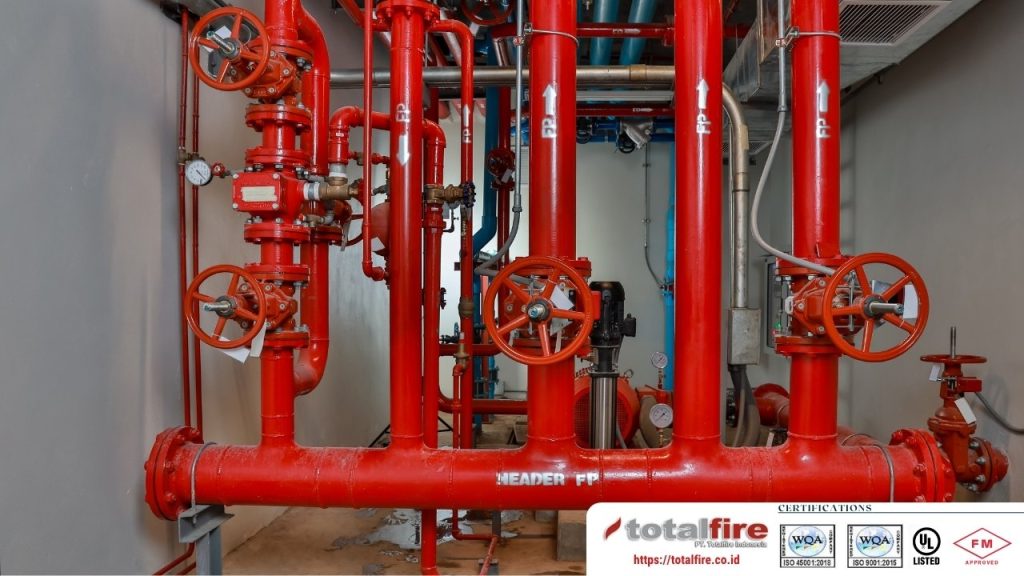
Planning to construct a new building or renovate an existing facility in Indonesia? One of the most critical — yet often overlooked — steps is engaging a qualified fire protection consultant early in the planning process. Whether your project is a commercial building, industrial facility, hospital, hotel, or data center, integrating fire protection from the ground up is far more effective and cost-efficient than retrofitting after construction is complete.
No one can predict when a major fire will occur. But when it does, a properly designed and installed fire protection system is what stands between a contained incident and a catastrophic loss of property and life.
Why Should You Work with a Fire Protection Consultant in Indonesia?
A building’s structural strength and aesthetic design are incomplete without a robust fire protection system. Engaging experienced, trained professionals ensures the process is carried out effectively, efficiently, and in full compliance with Indonesian regulations and international standards.
| Reason | Direct Benefit |
|---|---|
| Access to complete, certified equipment | A reputable consultant provides a full range of fire protection equipment — from basic extinguishers to complex suppression systems — all certified to international standards (UL, FM, NFPA) |
| Consulting and training services | Receive expert recommendations on evacuation route design, hazard zoning, and staff training on emergency response procedures |
| Cost efficiency | Fire protection planned from the design stage eliminates the need for structural modifications later — saving significant costs compared to post-construction retrofitting |
| Regulatory compliance | Ensures all installations meet Indonesian Minister of Public Works Regulation No. 26/2008, SNI standards, and NFPA — mandatory for obtaining the Building Occupancy Certificate (SLF) |
| Official documentation | All work is documented in formal technical reports usable for audits, insurance claims, and regulatory renewals |
Key Services Provided by a Fire Protection Consultant
The value of a professional fire protection consultant extends well beyond simply recommending equipment. Here is what you should expect from a qualified consultant.
1. Fire Safety Attribute Installation
Fire warning signs and safety codes are represented through symbols and attributes that may differ between countries and regulatory frameworks. A consultant ensures the correct safety attributes are installed on fire alarm systems, evacuation routes, and all required locations — fully compliant with Indonesian regulations and international standards such as NFPA 101 Life Safety Code.
2. Fire Hazard Management
The consultant provides direction on how to arrange spaces safely and minimize fire hazards. This includes recommendations on warehouse layout, storage of flammable materials and gases, spacing between heat-generating equipment, and optimal placement of fire detection devices across all zones of the building.
3. Evacuation Route Design
An effective evacuation route enables occupants to exit the building quickly and calmly when fire cannot be avoided. The consultant calculates occupant load, corridor widths, staircase positioning, and emergency exit locations in accordance with NFPA 101 and applicable local codes — ensuring maximum safety for all building users.
4. System Design and Engineering
Before a single component is installed, the consultant engineers the complete fire protection system — pump capacity calculations, detector placement per zone, sprinkler layout, pipe network design, and shop drawings that serve as the authoritative reference for on-site installation. This planning phase is what prevents costly and dangerous installation errors.
5. Installation by Certified Technicians
A fire protection consultant that also operates as a contractor handles installation directly using certified technicians trained to SNI and NFPA standards. This eliminates the risk gap between what was planned on paper and what is actually built in the field.
6. Inspection and Periodic Maintenance
After installation, fire protection systems require routine maintenance to remain operational and compliant. A professional consultant provides scheduled inspection and maintenance programs, complete with formal technical reports after each visit — documentation required for Building Occupancy Certificate (SLF) renewal and safety audits.
Fire Protection Regulations in Indonesia You Need to Know
International clients operating in Indonesia should be aware of the key regulations governing fire protection systems. All fire protection consultants and contractors operating in Indonesia must adhere to these:
| Regulation | Scope |
|---|---|
| Minister of Public Works Regulation No. 26/2008 | Technical requirements for fire protection systems in buildings — the primary regulation governing all active and passive fire protection components in Indonesia |
| Law No. 28 of 2002 on Buildings | Requires every building to have fire prevention and suppression capabilities — non-compliance results in denial of Building Occupancy Certificate (SLF) |
| SNI 03-3985-2000 | Indonesian National Standard for fire detection and alarm systems |
| NFPA Standards (International) | NFPA 13 (sprinklers), NFPA 14 (standpipe), NFPA 72 (fire alarm), NFPA 25 (maintenance), NFPA 101 (life safety) — referenced alongside Indonesian standards in most professional specifications |
| Permenaker No. PER-04/Men/1980 | Requirements for installation and maintenance of portable fire extinguishers (APAR) in workplaces |
What to Look for When Choosing a Fire Protection Consultant in Indonesia
Not all fire protection consultants operating in Indonesia offer the same level of expertise or service quality. Use this checklist when evaluating potential partners:
- Verifiable project portfolio — Request references and case studies of completed projects similar to your facility type (industrial, commercial, healthcare, data center, etc.).
- Proper licensing and certifications — Ensure the company holds valid business licenses and that their technicians carry recognized competency certifications.
- Adherence to NFPA and SNI standards — A professional consultant designs to international standards, not just empirical experience.
- End-to-end service capability — A company that handles consulting, installation, and maintenance provides better accountability and a single point of contact throughout the project lifecycle.
- Site survey before proposal — Any reputable consultant will conduct an on-site survey before submitting a proposal, not offer generic packages without assessing your facility.
- Transparent, itemized quotation — The proposal should clearly specify product brands, certifications, quantities, and unit prices — no hidden costs.
- Defined after-sales service — Confirm that installation warranty and a structured periodic maintenance program are included in the scope of work.
Totalfire Indonesia: Your Fire Protection Consultant and Contractor Partner
When starting your collaboration, choose a fire protection company that also provides consultant services and has a proven track record in both service quality and system installation. Totalfire Indonesia is one of the most recommended partners for international clients operating in Indonesia, offering comprehensive fire protection solutions across commercial, industrial, mining, oil and gas, telecommunications, and residential sectors.
Established in 2005, Totalfire Indonesia has built a reputation as a trusted fire protection specialist across Indonesia. Our services span the complete project lifecycle: initial consultation and fire risk assessment, technical design and engineering, procurement of internationally certified equipment, professional installation, commissioning, and ongoing maintenance.
All products we supply are certified to UL, FM, and NFPA standards. Our team designs and installs systems in full compliance with Indonesian regulations and international best practices.
FAQ: Fire Protection Consultant in Indonesia
Is it mandatory to use a fire protection consultant in Indonesia?
While engaging a consultant is not explicitly mandated by Indonesian law, the end result — a fire protection system that complies with Minister of Public Works Regulation No. 26/2008 — is a legal requirement. Without specialized expertise, building owners cannot realistically ensure their systems meet all technical requirements. Non-compliant systems result in denial of the Building Occupancy Certificate (SLF), meaning the building cannot legally operate. For international companies building or operating facilities in Indonesia, working with a qualified local consultant is essential to navigate both technical and regulatory requirements.
What is the difference between a fire protection consultant and a fire protection contractor in Indonesia?
A consultant focuses on analysis, planning, and technical recommendations — producing fire risk assessments, technical specifications, and engineering drawings. A contractor executes the physical installation work on-site based on those specifications. In Indonesia, many professional fire protection companies — including Totalfire Indonesia — operate as both consultant and contractor. This integrated model is highly advantageous for clients as it eliminates the gap between design intent and actual execution, providing a single accountable partner from planning through commissioning.
How long does the full process take from initial consultation to system commissioning?
The timeline depends on the scale and complexity of the facility. For a mid-sized commercial building, the typical process spans 2 to 4 months: site survey and data collection (1-2 weeks), technical planning and engineering drawings (2-4 weeks), equipment procurement (2-4 weeks depending on availability), installation (2-8 weeks depending on project scale), and commissioning and system testing (1 week). An initial consultation with our team will provide a more accurate project timeline based on your specific requirements.
Can Totalfire Indonesia handle fire protection projects outside Jakarta?
Yes. Totalfire Indonesia has handled fire protection projects across the entire Indonesian archipelago, including facilities in Sumatra, Kalimantan, Sulawesi, Papua, and other regions beyond Java. Our team is experienced in managing projects in remote industrial locations including mining sites, power plants, and oil and gas facilities. Contact us to discuss your project location and we will provide details on how we can mobilize our team to your site.
What certifications and standards does Totalfire Indonesia work to?
All fire protection systems designed and installed by Totalfire Indonesia conform to Indonesian national standards (SNI) and international standards published by the National Fire Protection Association (NFPA, USA). Products we supply are certified to UL (Underwriters Laboratories) and FM (Factory Mutual) standards. Our company holds ISO 9001 (quality management) and ISO 45001 (occupational health and safety) certifications, ensuring consistent quality and safety practices across all projects we undertake.
Reviewed and updated by the Fire Protection Engineering Team of PT Totalfire Indonesia on May 22, 2026. This article is periodically reviewed to ensure all technical information, regulatory references, and practical recommendations remain accurate and aligned with the latest fire safety standards applicable in Indonesia.